
You can write a good article, add the right keywords and still see nobody reading it. When that happens, the problem is often not the writing. It is that the page doesn’t match what the searcher actually wanted.
That is what search intent is about. Understanding it is one of the simplest ways for a small UAE business to make its website more useful, and more likely to be found.
In this guide, I’ll explain what search intent means, the four main types, and how to check it for your own keywords. No technical knowledge is needed.
What is search intent?
Search intent is the reason behind a search. Someone who types “how to register a business in Dubai” wants to learn. Someone who types “business setup consultants in Dubai” is comparing options. They both searched about the same topic, but they need very different pages.
Google tries to show the results that best match what people are looking for. So a page that gives people what they want has a better chance of being useful, and of being found. A page that misses the intent is likely to be ignored, however well it is written.
The four main types of search intent
- Informational: the person wants to learn something. Example: “how to start a social media page for a business”. Best page: a blog post or guide.
- Navigational: the person wants to reach a specific site or page. Example: “Canva login”. Best page: your homepage or a clear brand page.
- Commercial: the person wants to compare options before deciding. Example: “best social media tools for small business”. Best page: a comparison, review or service page.
- Transactional: the person wants to act: buy, book or contact. Example: “book a photographer in Dubai”. Best page: a service, product or booking page.
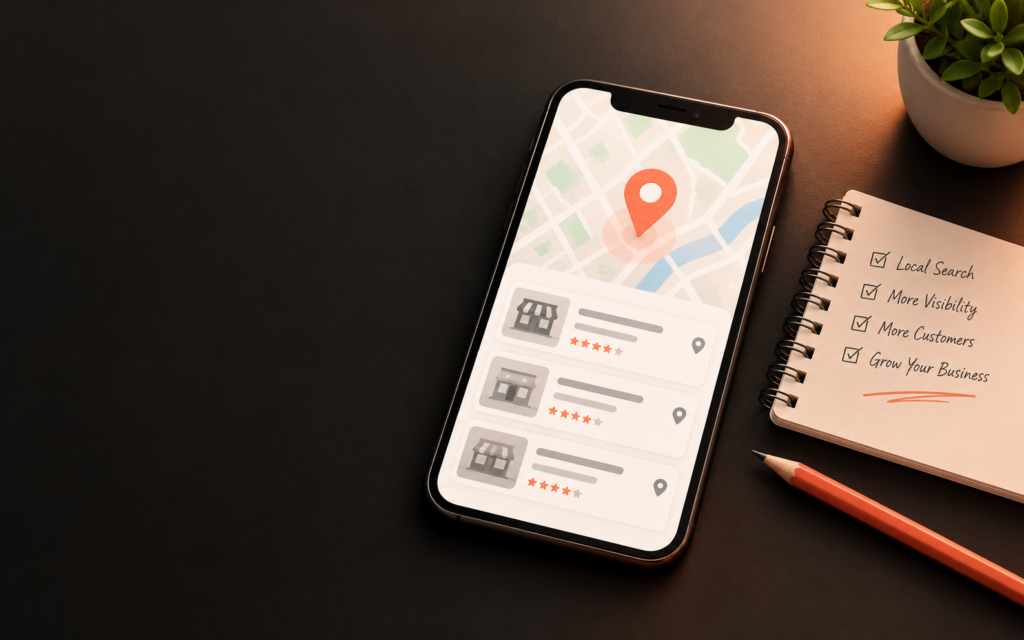
Many searches in the UAE also have a local element. People add words like “near me” or the name of an area, such as “Marina” or “Deira”. Those searchers usually want a nearby business they can visit or call.
How to find the intent behind a keyword
You don’t need a paid tool to do this.
Step 1: Search the keyword yourself
Type the phrase into Google and look at the first page. Don’t read the content in detail. Look at what kind of pages appear. Are they blog posts, service pages, product pages, maps or videos? That tells you what Google believes people want.You don’t need a paid tool to do this.
Step 2: Read the titles and descriptions
If most results start with “How to…”, the intent is informational. If they say “Best…” or “Top 10…”, it is commercial. If they say “Book now” or show prices, it is transactional.
Step 3: Check “People also ask” and the suggestions
The questions in the box and the suggestions at the bottom of the page show how people phrase the same need. They are free ideas for your headings and FAQs.
Step 4: Match your page to the intent
This is the step most beginners skip. Ask yourself:
- Should this be a blog post (informational) or a service page (transactional)?
- Does my first paragraph answer the question straight away?
- Is the next step clear?
How to write for each intent
Informational:
Answer the question in the first few lines, then explain it step by step. Use short headings, simple examples and a short summary. Don’t try to sell hard here. Help first, and offer your service gently at the end.
Commercial:
Help the reader choose. Explain who each option suits, what is included and what to ask before deciding. Be honest about limits, because trust matters most at this stage.
Transactional:
make action easy. Show what you offer, how it works, and how to contact you or book. A WhatsApp button, a clear price range if you can share one, and a short FAQ all help.
Navigational:
make sure your business name is clear everywhere, and that your homepage, menu and Google Business Profile are accurate.
Search intent in the UAE: a few things to remember
- People search in more than one language. Some people search in English, some in Arabic, and some switch between the two. Think about which words your customers really use, and whether a page in Arabic would help.
- Local searches matter. If you serve customers in a particular area, mention it naturally and keep your Google Business Profile up to date.
- Different words for the same thing. Customers may say “company setup”, “business licence” or “trade licence”. Use the phrases your customers actually use, and check them against what Google shows.
- Mobile first. Many searches are on phones, so your pages must load quickly and be easy to read on a small screen.
A simple example
Imagine you own a small bakery in Jumeirah and you want more orders for celebration cakes.
- “Cake ideas for birthday parties” is informational. A blog post with ideas and tips fits, with a gentle link to your cakes.
- “Custom birthday cakes Dubai” is transactional. A page with your cakes, prices and an order button fits.
- “Best bakery in Jumeirah” is commercial and local. Your Google Business Profile, reviews and photos matter most.
It is the same business with three different needs, and each one needs a different page.
Common mistakes to avoid
- Writing one page for every keyword. Each page should answer one main need.
- Using a blog post where a service page is needed. If people want to buy, don’t make them read a long essay first.
- Stuffing keywords. Write for people, and use the phrase naturally.
- Never checking results. Look at which searches bring visitors, and improve those pages.
- Expecting results overnight. SEO takes time, and I’d be wary of anyone who guarantees rankings.
Frequently asked questions
Is search intent a ranking factor?
It is not a setting you can switch on. It is better to think of it as the reason a page does or doesn’t succeed: if your page doesn’t match what people want, it is less likely to be useful to them, or to perform well.
How do I find out which keywords people use?
Start with Google’s suggestions and the “People also ask” box. Google Search Console (free) shows the searches that already bring people to your site, and Google Keyword Planner can give you more ideas.
Do I need paid tools to do this?
No. A browser, a notebook and Google Search Console are enough to begin. Add paid tools only if you find you need them.
How long does SEO take?
It depends on your competition and your site, and it often takes months of steady work. Treat it as something you improve gradually, not a quick fix.
Final thoughts
Search intent is not a trick. It is simply the habit of asking, “What does this person really want, and does my page give it to them?”
Start small. Pick three keywords for your business, search them, note the type of results, and check whether your page matches. Fix one page at a time.
If you’d like help with this, you can see how I work on my SEO services page, or message me on WhatsApp and tell me about your business. I’ll reply with simple ideas and clear next steps.